

🌱🤖 From Pikachu to Blue Tit
In Search of Regenerative Intelligence #31

Why can children name every Pokémon, but cannot distinguish a sparrow from a blue tit? Since I became a dad, I’ve been pondering this question. One answer is “TV.” Another one is that parents also lack knowledge of their surroundings. Let me know if you have any thoughts or know of books about this question.
This question about our connection to nature lead me to this cool project by Edward Crowther. It’s a creative project celebrating the species that power our planet, imagined as retro action figures.
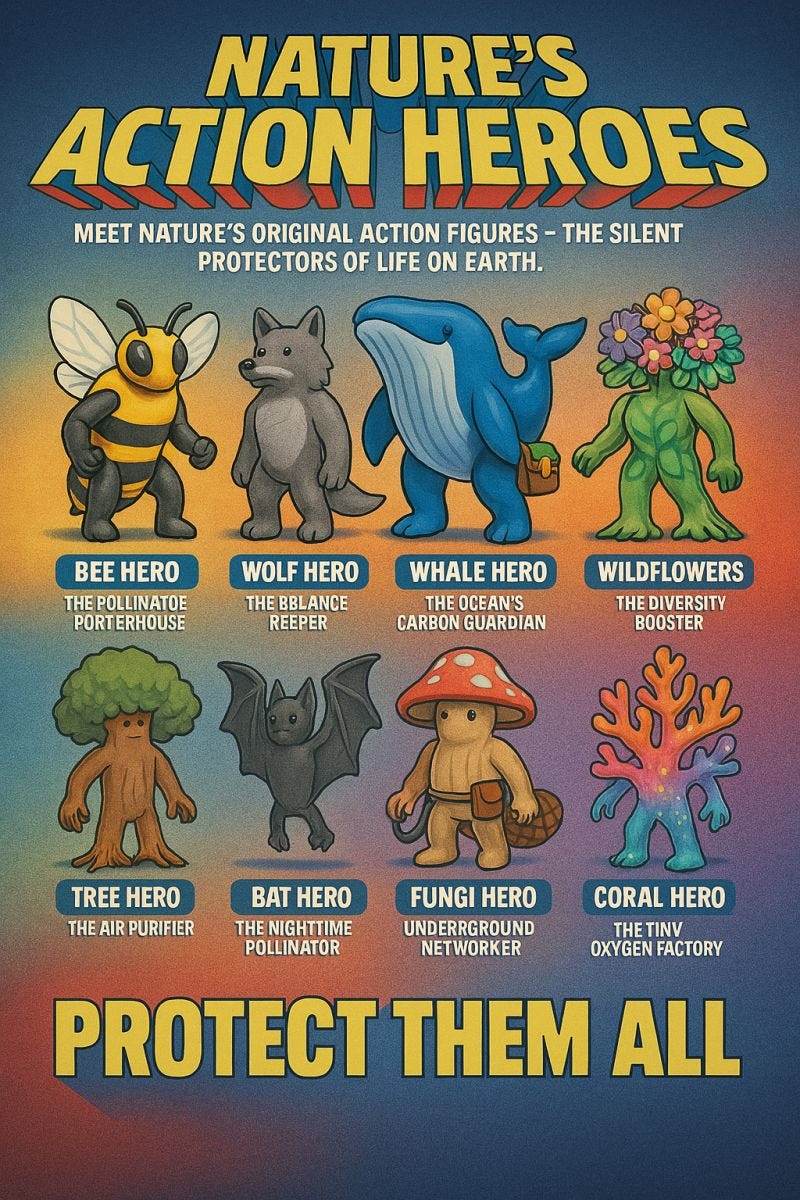
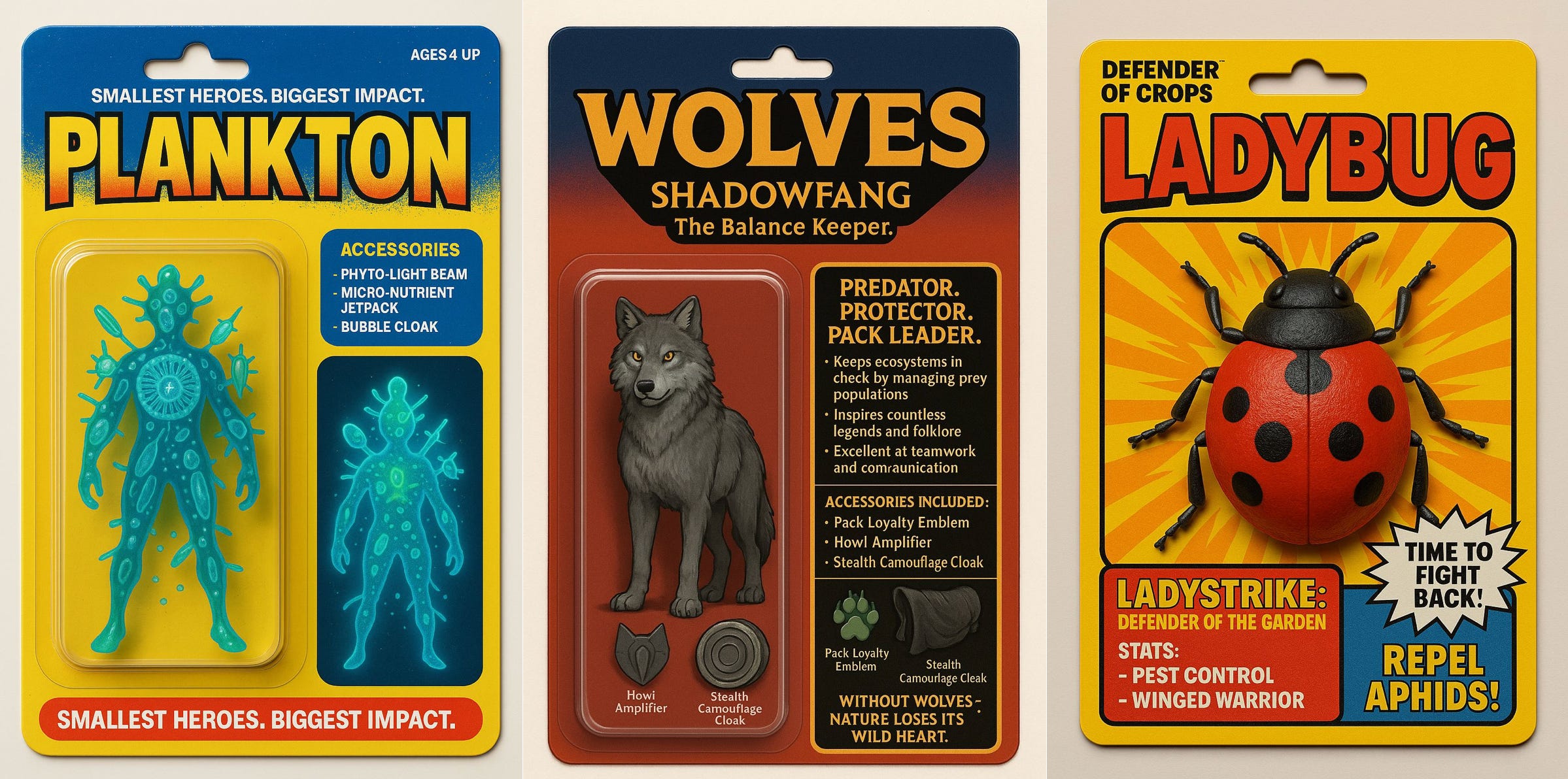
Plankton has its phyto-light beam, the wolf keeps ecosystems in check, and the ladybug helps with pest control. It’s a playful yet powerful attempt to reconnect people with the natural world by making it as exciting and iconic as the pop culture we’re steeped in.
This idea also resonates with something Estelle Zhong Mengual said in an interview with Philosophy Magazine. She ellaborates on our impoverished natural vocabulary and the weak associations we have with nature. When we think of a train, we see stories, memories and metaphors. But when we think of a deer, we only see such an animal standing among the trees.

She explains: “it's about the associations we make, the world that comes along with the image we have of something. Suppose I ask you to think of a pigeon, it is possible that the only thing that comes to mind is 'mangy flea-ridden creature.' That would then show your poor relationship with that bird. But when you ask people to think of love, a whole range of associations opens up for them, provided by their experiences, stories they've heard, and art they've seen. Falling in love is therefore very intense. I hope that the feeling people get when they see the living world around them will one day become just as intense."
If we want to nurture a deeper connection with nature, in ourselves and in our children, we need more than just information; we need stories, symbols, and emotional resonance. Just like superheroes spark wonder and curiosity in kids, we can cultivate that same awe for the living world through playful imagination and richer language. Maybe the first step is instead of Pokemon, to watch some relaxing nature / animal clips together and name the different monkeys instead of the pokemon. Or hang a birdhouse in the garden and enjoy watching the birds as they seek nest material and later feed their young. Or just ask some intruiging questions about the clouds, the moon, ants, or plants. Because what we come to love usually begins not with understanding, but with a sense of wonder.
That’s it for now. I hope you learned something new and I wish you the best adventures, thought-provoking questions and exciting discoveries!
Nice Thijs. I really love the initiative on the nature action hero's to try out with my kids :). Keep going with this inspirational news letter!